Property Management vs. Leasing Brokerage: Understanding the Difference
In the rental real estate market, the terms property management and leasing brokerage are often used interchangeably. However, these services serve distinct purposes, involve different scopes of work, and are suited to different types of property owners.
Understanding the distinction helps landlords, investors, and clients engage the appropriate professional service and set clear expectations from the outset.
Leasing Brokerage Explained
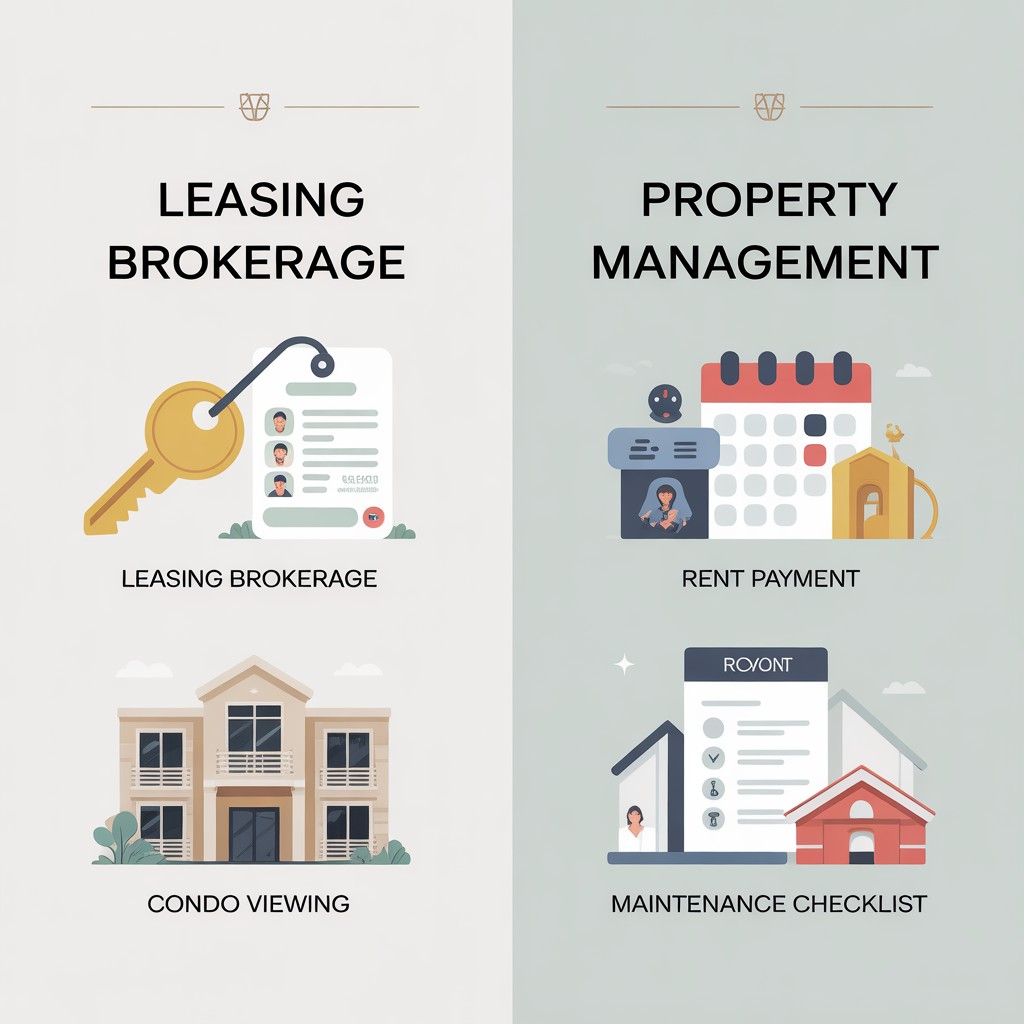
Leasing brokerage refers to the professional service of marketing a property and securing a tenant.
A licensed real estate broker acting as a leasing broker typically assists with:
-
Promoting the property through appropriate channels
-
Coordinating and conducting property viewings
-
Screening prospective tenants
-
Negotiating lease terms
-
Preparing or facilitating the Contract of Lease
-
Coordinating the initial unit turnover to the tenant
Once a suitable tenant has been secured and the lease has commenced, the leasing broker’s role is generally concluded, unless otherwise agreed.
Leasing brokerage is appropriate for:
-
Property owners who prefer to manage the tenancy themselves
-
Owners who are readily available to handle tenant concerns
-
Situations requiring tenant placement only, rather than ongoing oversight
Property Management Explained
Property management is a continuing professional service that covers the administration of a rental property throughout the lease period.
A property manager typically handles:
-
Rent collection and monitoring
-
Coordination of repairs and routine maintenance
-
Communication with tenants regarding concerns or issues
-
Liaison with condominium corporations or homeowners’ associations
-
Monitoring lease compliance and renewal timelines
-
Coordinating move-in and move-out procedures
Property management requires consistent involvement and is designed to protect both the operational condition of the property and the owner’s long-term interests.
Property management is appropriate for:
-
Owners who are frequently unavailable or based overseas
-
Investors with multiple rental properties
-
Owners who prefer a hands-off approach to rental operations
Comparing the Two Services
| Aspect | Leasing Brokerage | Property Management |
|---|---|---|
| Primary Function | Tenant placement | Ongoing tenancy administration |
| Duration of Service | One-time or short-term | Continuous throughout the lease |
| Rent Collection | Up to submission of Post-dated Checks | Included |
| Maintenance Coordination | Not included | Included |
| Level of Involvement | Limited | Extensive |
Selecting the Appropriate Service
The appropriate service depends on the property owner’s level of availability, desired involvement, and the complexity of the rental arrangement.
Some owners initially engage a leasing broker to secure a tenant and later transition to property management once the demands of day-to-day oversight become evident.
On Professional Fees and Scope
Professional fees for leasing brokerage and property management are structured differently, reflecting the difference in scope, duration, and level of responsibility involved.
Leasing brokerage is commonly treated as a one-time professional service, while property management involves ongoing responsibilities throughout the lease term. For this reason, rates are discussed and agreed upon based on the specific requirements of the property and the owner’s objectives.
Clear definition of scope and fees at the beginning of an engagement promotes transparency and ensures a productive working relationship between property owners and licensed real estate professionals.